


Tactile PU Tile with Directional Strips
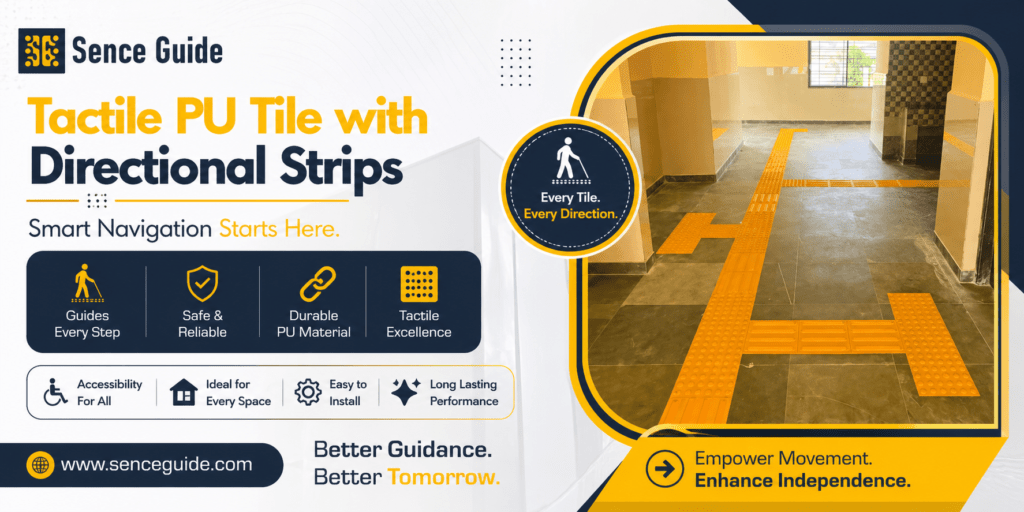
Table of Contents
Introduction
Founded in 2023, AS Enterprise is a Rajkot, Gujarat–based company dedicated to manufacturing high-quality accessibility and safety products. With a modern production facility and a skilled technical team, we ensure every product meets the highest standards of precision, durability, and performance.
In the rapidly evolving world of today, accessibility is not only necessary but also a duty. The architecture of public areas, business buildings, train stations, airports, and walkways must guarantee everyone’s safety and ease of mobility, particularly those who are blind or visually impaired. Using Tactile PU Tile with Directional Strips is one of the best ways to address this. Our speciality at AS Enterprise is offering premium tactile solutions that boost safety, facilitate navigation, and adhere to international accessibility guidelines.
We’ll go over everything you need to know about tactile PU tiles with directional strips in this blog, including their advantages, uses, and the reasons they are crucial to contemporary infrastructure. At AS Enterprise, we specialise in providing high-quality tactile solutions that enhance accessibility, safety, and convenience. In this blog, we’ll explore what tactile PU tiles are, their benefits, applications, and why they are becoming an essential part of modern infrastructure. We are the best Tactile PU Tile with Directional Strips Manufacturer.
What Are Tactile PU Tiles with Directional Strips
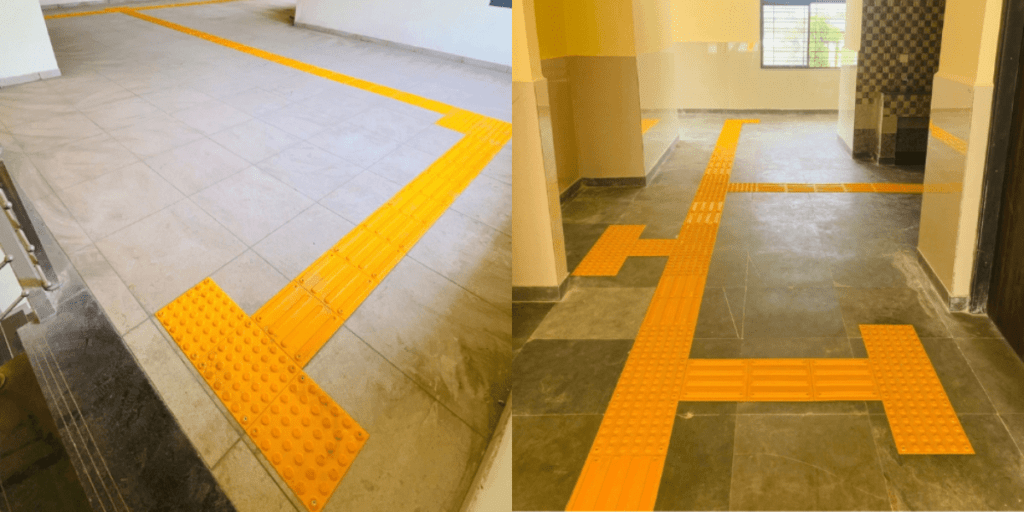
A Tactile PU Tile with Directional Strips is a specially designed flooring solution made from polyurethane (PU) material. These tiles feature raised linear patterns and directional strips that guide visually impaired individuals along safe walking paths. The raised strips can be felt underfoot or with a cane, helping users navigate confidently without relying on visual cues. These tiles are a critical component of accessible design systems and are widely used in both indoor and outdoor environments. We are the best Tactile PU Tile with Directional Strips Supplier.
- Railway stations
- Shopping malls
- Footpaths
- Educational institutions
- Directional strips are straight-line patterns on these tiles that guide a person in a specific direction. These strips act like a path, allowing users to move independently without confusion.
Why Choose AS Enterprise
1. Enhanced Safety for Visually Impaired People
- The primary purpose of tactile PU tiles with directional strips is to provide clear navigation guidance. The raised linear bars (directional strips) help individuals detect the correct walking path using their feet or a cane.
- Helps users move safely in crowded areas
- Reduces risk of accidents
- Creates a clear and continuous walking route
2. Promotes Independence & Accessibility
- Directional tactile tiles empower visually impaired individuals to move independently without relying on others.
- Provides confidence in navigation
- Ensures inclusive infrastructure design
- Supports universal accessibility standards
3. Strong & Durable Material Polyurethane Advantage
- Polyurethane (PU) is known for its superior strength and flexibility compared to traditional materials like concrete or ceramic.
- Resistant to cracks and breakage
- Handles heavy foot traffic easily
- Long-lasting performance
4. Slip-Resistant & Weatherproof
- Safety is not just about guidance—it’s also about stability. PU tactile tiles offer:
- Anti-slip surface for wet and dry conditions
- UV resistance, no fading in sunlight
- Weather resistance to rain, heat, and dust
5. Clear Directional Guidance System
- Directional strips are specifically designed to guide movement in a straight and safe path.
- Helps users follow correct routes
- Indicates entry/exit paths
- Works seamlessly with warning tiles
6. Easy & Quick Installation
- One of the biggest advantages of PU tactile tiles is their simple installation process.
- Available in peel-and-stick (self-adhesive) options
- No heavy drilling required
- Saves time and labour costs
7. Cost-Effective Solution
- Compared to other tactile systems, PU tiles provide excellent value for money.
- Lower maintenance cost
- Long lifespan reduces replacement needs
- Quick installation saves project cost
8. Compliance with Safety Standards
- Using tactile PU tiles helps buildings meet national and international accessibility guidelines.
- Supports barrier-free environment regulations
- Used in government and public projects
- Ensures legal compliance
9. Versatile Applications
- Tactile PU tiles with directional strips are highly versatile and can be used in:
- Railway stations & metro platforms
- Airports & bus terminals
- Hospitals & educational institutions
- Footpaths & pedestrian crossings
10. Aesthetic & Customizable Design
- Apart from functionality, these tiles also offer visual appeal.
- Available in multiple colours: yellow, grey, black, etc.
- Blends with modern architecture
- Provides high visibility contrast
Applications of Tactile PU Tiles with Directional Strips
1. Railway Stations and Metro Platforms
- One of the most common applications is in transportation hubs like railway stations and metro stations.
- Guides passengers safely along platforms
- Indicates safe boarding areas
- Prevents accidental falls near track edges
2. Airports
- Airports are large and complex spaces. Tactile PU tiles play a crucial role in making them accessible.
- Direct passengers from the entrance to the check-in counters
- Guide towards the boarding gates and restrooms
- Improve overall passenger experience
3. Footpaths and Public Walkways
- Urban development projects now include tactile tiles in sidewalks and pedestrian pathways.
- Provide safe walking paths in crowded areas
- Help avoid obstacles like poles, trees, or crossings
- Enhance inclusive city planning
4. Shopping Malls and Commercial Complexes
- Modern malls are adopting accessibility solutions to serve all visitors.
- Guide customers from entrances to elevators and escalators
- Help locate restrooms, exits, and information desks
- Improve brand image with an inclusive infrastructure
5. Hospitals and Healthcare Facilities
- Hospitals must ensure easy navigation for all patients, including those with visual impairments.
- Direct patients to reception, OPD, and wards
- Guide towards emergency exits
- Reduce dependency on assistance
6. Educational Institutions
- Schools, colleges, and universities are increasingly implementing tactile solutions.
- Help students navigate campuses independently
- Guide paths between classrooms, libraries, and offices
- Promote inclusive education
7. Government Buildings
- Government offices must follow accessibility standards, making tactile tiles essential.
- Guide visitors to service counters
- Improve accessibility compliance
- Enhance public service experience
8. Parking Areas
- Tactile PU tiles are also used in parking zones.
- Guide pedestrians safely through parking lots
- Mark pathways leading to entrances
- Reduce risk of accidents
9. Residential Complexes
- Premium residential projects are now integrating tactile tiles.
- Provide safe pathways for residents and visitors
- Enhance property value with inclusive design
- Improve overall safety
10. Industrial and Factory Premises
- In industrial environments, safety is a top priority.
- Guide workers along safe walking paths
- Mark hazardous zones
- Improve workplace safety compliance
Specification Table Tactile PU Tile with Directional Strips
| Parameter | Specification |
|---|---|
| Material | Tactile PU Tile with Directional Strips |
| Product Name | Polyurethane (PU) |
| Tile Size | 300 x 300 mm / 400 x 400 mm (customizable) |
| Thickness | 5 mm – 8 mm |
| Surface Type | Anti-slip textured |
| Pattern Type | Directional (Linear Strips) |
| Color Options | Yellow, Grey, Black, Custom Colors |
| Installation Method | Adhesive / Mechanical Fixing |
| Load Bearing Capacity | High (Suitable for heavy foot traffic) |
| Weather Resistance | Excellent (UV & Water Resistant) |
| Application Area | Indoor & Outdoor |
| Maintenance | Low maintenance |
| Standards Compliance | Accessibility & Safety Norms |
Benefits of Tactile PU Tile with Directional Strips
1. Enhanced Navigation for the Visually Impaired
- One of the most important advantages of tactile PU tiles with directional strips is their ability to provide clear navigation guidance.
- Independent movement in public areas
- Reduced reliance on assistance
- Confidence in navigating complex spaces
2. Improved Safety and Accident Prevention
- Safety is a top priority in any infrastructure project. These tiles significantly reduce the risk of:
- Slips and falls
- Missteps near hazardous zones
- Accidental entry into unsafe areas
3. Strong Directional Guidance System
- Directional strips provide a clear path-following system. Unlike random flooring patterns, these tiles create a structured walking route that:
- Guides users in a straight direction
- Helps identify entry/exit points
- Connects key areas like stairs, lifts, and crossings
4. High Durability and Long Lifespan
- PU (polyurethane) is known for its excellent strength and flexibility. Tactile PU tiles offer:
- Resistance to wear and tear
- Ability to handle heavy foot traffic
- Crack resistance compared to concrete or ceramic
5. Weather and UV Resistance
- Unlike traditional materials, PU tactile tiles are highly resistant to:
- UV rays (no fading or discolouration)
- Rain, heat, and temperature changes
- Corrosion and environmental damage
6. Anti-Slip Surface for Maximum Safety
- These tiles are designed with textured surfaces that provide excellent grip. Benefits include:
- Safe walking in wet conditions
- Reduced slipping hazards
- Better traction in high-traffic zones
7. Easy and Quick Installation
- Tactile PU tiles often come with self-adhesive backing or simple fixing systems, allowing:
- Fast installation without drilling
- Reduced labor costs
- Minimal disruption during installation
8. Lightweight Yet Strong
- Despite their strength, PU tiles are lightweight, which offers:
- Easy transportation
- Quick handling during installation
- Reduced structural load
9. Compliance with Accessibility Standards
- Tactile PU tiles help meet important accessibility regulations, such as:
- Airports
- Railway stations
- Hospitals
- Government buildings
10. Cost-Effective Solution
- Compared to materials like stainless steel or brass, PU tactile tiles are:
- More affordable
- Easier to install
- Low maintenance
Types of Tactile PU Tile with Directional Strips
1. Straight Directional Strip Tiles
- These tiles have straight, parallel raised lines.
Features
- Footpaths
- Corridors
- Walkways
2. Curved Directional Strip Tiles
- These tiles have slightly curved or angled strips.
Features
- Areas where direction changes
- Path transitions
3. Multi-Directional PU Tiles
- These tiles combine multiple directional patterns.
Features
- Complex layouts
- Public areas with multiple routes
4. Indoor PU Directional Tiles
- Specially designed for indoor environments.
Features:
- Smooth finish
- Stylish design
- Easy maintenance
5. Outdoor PU Directional Tiles
- Designed to withstand harsh weather conditions.
Features:
- UV resistant
- Water-resistant
- Anti-slip texture
Conclusion
Tactile PU Tiles with Directional Strips are more than just flooring—they are a vital element of inclusive design. They provide safety, guidance, and independence to visually impaired individuals, making public and private spaces more accessible. We are the best Tactile PU Tile with Directional Strips Exporter.
At AS Enterprise, we are dedicated to delivering high-quality tactile solutions that meet modern infrastructure needs. Whether it’s a small project or a large-scale installation, our tactile PU tiles ensure durability, safety, and efficiency.