


Tactile PU Tile with Directional Design
Introduction
Founded in 2023, AS Enterprise is a Rajkot, Gujarat–based company dedicated to manufacturing high-quality accessibility and safety products. With a modern production facility and a skilled technical team, we ensure every product meets the highest standards of precision, durability, and performance.
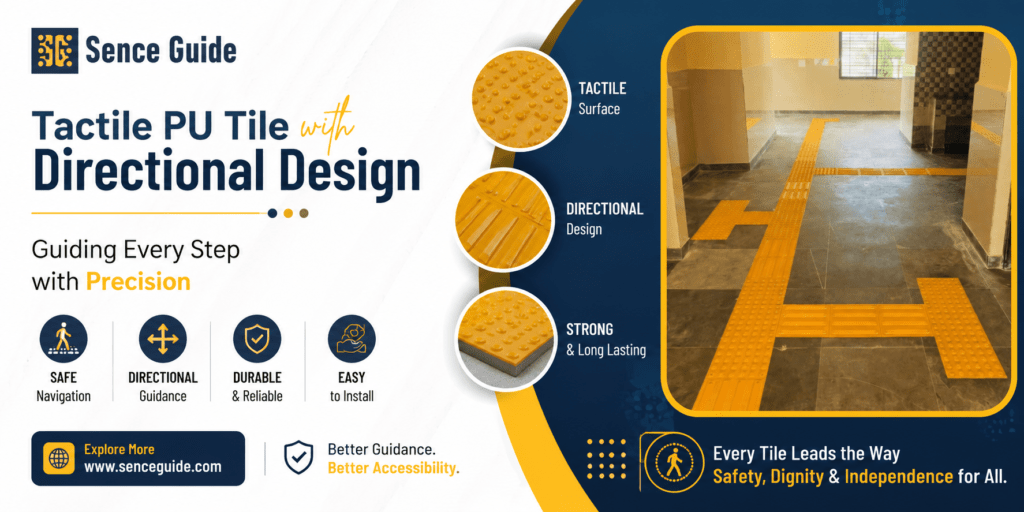
Safety and accessibility are crucial in today’s modern infrastructure. Everyone must be able to move securely through public areas, including walkways, train stations, airports, shopping centres, and hospitals, especially those who are blind or visually impaired. Tactile PU Tile with Directional Design is crucial in this situation. These tiles are specifically made to use touch and texture patterns on the ground to help people who are blind or visually impaired.
AS Enterprise is a reputable brand that produces superior tactile solutions that enhance accessibility, safety, and intelligent urban planning. AS Enterprise is a trusted manufacturer and supplier of high-quality tactile solutions, offering durable and reliable Tactile PU Tiles with Directional Design for modern infrastructure needs. We are the best Tactile PU Tile with Directional Design Manufacturer.
What is Tactile PU Tile with Directional Design
- A Tactile PU Tile with Directional Design is a specially engineered flooring tile made from polyurethane (PU) material. It has raised patterns and textures on the surface that can be felt underfoot or with a cane. We are the best Tactile PU Tile with Directional Design Supplier.
- Public walkways
- Railway stations
- Shopping malls
- Government buildings
- Footpaths and sidewalks
- The directional design includes linear patterns that guide users in a specific direction, helping them move safely and independently in public spaces. PU material makes these tiles flexible, durable, and weather-resistant, which makes them ideal for both indoor and outdoor installations.
Why Choose AS Enterprise
1. Enhanced Safety for Visually Impaired Individuals
- The primary purpose of tactile tiles is to assist people with visual impairments in navigating public spaces safely. The directional design pattern in PU tactile tiles provides a clear guiding path that can be easily detected through a walking cane or underfoot sensation.
- Helps indicate safe walking routes
- Guides towards exits, staircases, or crossings
- Reduces the risk of accidents in crowded areas
2. High Durability with PU Material
- Polyurethane (PU) is known for its strength, flexibility, and resistance to environmental stress. Compared to traditional materials like concrete or ceramic, PU tactile tiles offer superior performance.
- Resistance to heavy foot traffic
- Long-lasting color and texture
- Crack-resistant and flexible under pressure
- Suitable for both indoor and outdoor use
3. Excellent Weather Resistance
- Outdoor installations require materials that can withstand extreme weather conditions. Tactile PU tiles perform exceptionally well in this regard.
- UV-resistant surface prevents fading
- Water-resistant and non-slip, even during rain
- Withstands heat, cold, and humidity changes
4. Strong Anti-Slip Properties
- Safety in public spaces is heavily dependent on slip resistance, especially during wet conditions. The textured surface of directional PU tactile tiles provides:
- Superior grip for pedestrians
- Reduced the chances of slipping accidents
- Safe movement in crowded areas
5. Easy Installation and Low Maintenance
- Another major advantage of PU tactile tiles is their ease of installation. They are lightweight compared to concrete alternatives and can be installed quickly with strong adhesives.
- Easy cleaning with basic methods
- No need for frequent repairs
- Long service life reduces replacement cost
6. Clear Directional Guidance System
- The directional pattern design is not just aesthetic—it plays a functional role in navigation systems.
- Straight grooves guide forward movement
- Helps define walking corridors
- Integrates well with warning tiles for decision points
7. Compliance with Accessibility Standards
- Many public infrastructure projects are required to meet accessibility standards. Tactile PU tiles with directional design help ensure compliance with:
- Disability access guidelines
- Urban development regulations
- Public safety norms
8. Aesthetic Integration with Modern Architecture
- Unlike older tactile systems that were purely functional, PU tactile tiles are designed with aesthetics in mind.
- Clean and modern appearance
- Available in various colours (commonly yellow for visibility)
- Blends well with urban landscapes
9. Eco-Friendly and Sustainable Choice
- Many PU tactile tiles are manufactured using environmentally responsible processes. Their long lifespan also reduces material waste over time.
- Lower replacement frequency reduces environmental impact
- Energy-efficient manufacturing options available
- Supports sustainable infrastructure development
10. Cost-Effective Long-Term Investment
- Although initial installation cost may vary, PU tactile tiles prove economical over time due to:
- Long durability
- Minimal maintenance
- Reduced replacement needs
- Lower repair frequency
Applications of Tactile PU Tile with Directional Design
1. Railway Stations and Metro Platforms
- One of the most important applications is in railway and metro stations. Directional tactile tiles help visually impaired passengers navigate safely along platforms, corridors, and entry/exit points.
- Guides passengers toward boarding areas
- Warns about platform edges and hazardous zones
- Ensures smooth movement in crowded areas
2. Airports and Terminals
- Airports are large, complex spaces where navigation can be challenging. Tactile PU tiles are used to create safe pathways and directional guidance systems.
- Helps passengers locate check-in counters and gates
- Provides safe walking routes for differently-abled travellers
- Improves accessibility compliance in international terminals
3. Footpaths and Public Walkways
- City sidewalks and pedestrian zones are key areas where tactile guidance systems are installed.
- Directs pedestrians safely along walking routes
- Alerts about crossings, junctions, and road edges
- Enhances urban safety infrastructure
4. Commercial Buildings and Shopping Malls
- Large commercial spaces use tactile PU tiles to ensure inclusivity and ease of movement.
- Guides visitors from entrances to elevators and exits
- Helps locate emergency exits and staircases
- Improves accessibility in retail environments
5. Hospitals and Healthcare Facilities
- Hospitals require highly accessible navigation systems, and tactile directional tiles are essential here.
- Assists patients and visitors in finding departments
- Guides movement in long corridors and multi-wing buildings
- Enhances emergency evacuation routes
6. Educational Institutions
- Schools, colleges, and universities increasingly adopt accessibility solutions for inclusive infrastructure.
- Helps visually impaired students navigate campuses
- Provides directional guidance between classrooms and facilities
- Supports inclusive education environments
7. Government Buildings and Public Offices
- Public service buildings are legally required to ensure accessibility compliance.
- Guides visitors to service counters and help desks
- Mark safe walking routes inside large office complexes
- Ensures compliance with accessibility regulations
8. Road Crossings and Traffic Zones
- Tactile PU directional tiles are widely used near pedestrian crossings and intersections.
- Warns about road crossings and vehicle zones
- Directs pedestrians toward zebra crossings
- Reduces accident risks in high-traffic areas
9. Smart Cities and Urban Infrastructure Projects
- In modern smart city developments, tactile paving is integrated as a standard accessibility feature.
- Supports universal design principles
- Enhances smart mobility solutions
- Improves safety and navigation for all citizens
10. Residential Complexes and High-Rise Buildings
- Premium housing societies and apartments also incorporate tactile guidance systems.
- Assists residents and visitors in navigating lobbies and basements
- Improves safety in parking areas and elevators
- Adds value to accessible housing infrastructure
Specification Table of PU Tile with Directional Design
| Feature | Specification |
|---|---|
| Material | Tactile PU Tile with Directional Design |
| Product Name | Polyurethane (PU) |
| Surface Type | Anti-slip textured surface |
| Design Type | Directional guiding lines |
| Color Options | Yellow, Black, Grey (Custom available) |
| Thickness | 3 mm to 5 mm (customizable) |
| Size | Standard 300mm x 300mm (custom sizes available) |
| Installation Type | Adhesive / Fixing paste |
| Weather Resistance | UV and water resistant |
| Load Capacity | High foot traffic suitable |
| Maintenance | Low maintenance |
| Application Area | Indoor & Outdoor |
Benefits of Tactile PU Tile with Directional Design
1. Improves Safety for Visually Impaired People
- The most important benefit of directional PU tactile tiles is safe navigation. The raised bar pattern provides a clear tactile signal underfoot or through a cane, guiding people along a safe walking path.
- Helps identify walking routes in crowded areas
- Reduces the chances of accidents or wrong direction movement
- Provides consistent guidance in public spaces like stations and malls
2. Enhances Directional Guidance in Public Spaces
- Directional tactile tiles are designed specifically to create a continuous guiding path. They are commonly installed in:
- Railway and metro stations
- Airports and bus terminals
- Shopping malls and commercial complexes
- Footpaths and pedestrian corridors
3. High Durability and Long Life
- PU material is known for its strength and long-lasting performance. Compared to traditional ceramic or concrete tactile solutions, PU tiles:
- Do not crack easily
- Resist heavy foot traffic
- Maintain surface texture for years
- Perform well in indoor and outdoor environments
4. Weather Resistant & UV Stable
Directional PU tactile tiles are designed to withstand harsh environmental conditions:
- Rain and moisture resistant
- UV-stable, no fading in sunlight
- Heat and cold-resistant
- Suitable for outdoor installation
5. Anti-Slip Surface for Extra Safety
- Safety is a key advantage. The textured PU surface provides excellent grip, reducing slip risks even in:
- Wet conditions
- High-humidity areas
- Heavy pedestrian zones
6. Quick and Easy Installation
- PU directional tiles are designed for fast installation, which reduces project time and labour cost.
- Available with adhesive or screw-fix systems
- Can be installed on multiple surfaces (stone, concrete, metal, etc.)
- Covers a larger area compared to individual studs or strips
7. Cost-Effective Accessibility Solution
- Compared to stainless steel or brass tactile systems, PU tiles are:
- More affordable
- Easier to install
- Low maintenance
- Long-lasting
8. Supports Inclusive & Universal Design
- Directional tactile tiles promote inclusivity in modern architecture:
- Help visually impaired individuals move independently
- Improve accessibility compliance in buildings
- Support universal design standards in public infrastructure
- Encourage safer and more inclusive urban environments
9. Low Maintenance Requirement
- Once installed, PU tactile tiles require very little maintenance:
- Easy to clean with simple washing
- Resistant to stains and wear
- No frequent repair or replacement needed
10. Better Aesthetic Integration
- Modern PU tactile tiles come in multiple colours and finishes, allowing architects to:
- Match the flooring design with the surroundings
- Maintain visual contrast for better visibility
- Create clean and professional-looking walkways
Types of PU Tile with Directional Design
1. Directional Bar Tactile Tiles
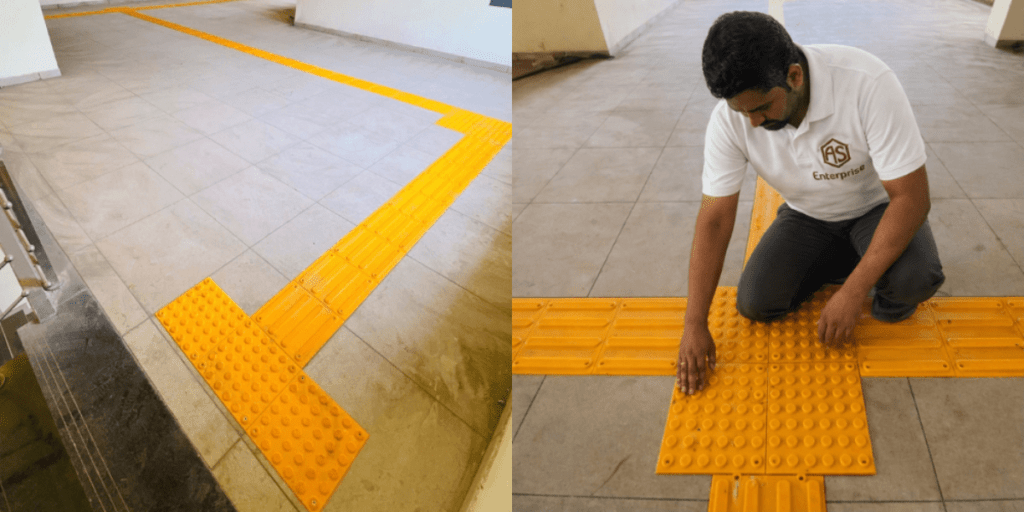
- These tiles have long, raised bars that run in a straight line. They are used to guide people in a specific direction.
Best for:
- Corridors
- Railway stations
- Airport walkways
- Shopping malls
2. Warning or Hazard Tactile Tiles
- These tiles have a dot or stud pattern. They alert users about danger or changes in walking paths.
Best for:
- Staircases
- Road crossings
- Platform edges
- Elevator entrances
3. Combination Tactile Tiles
- These tiles combine both directional lines and warning dots. They provide both guidance and safety alerts.
Best for:
- Complex public areas
- Transport hubs
- Large commercial buildings
4. Self-Adhesive PU Tactile Tiles
- These tiles come with an adhesive backing for easy installation without heavy tools or cement.
Best for:
- Temporary installations
- Indoor spaces
- Renovation projects
5. Heavy-Duty Outdoor PU Tiles
- These are specially designed for extreme outdoor conditions like heavy rain, heat, or constant foot traffic.
Best for:
- Roads
- Bus stations
- Outdoor walkways
- Industrial areas
Conclusion
The Tactile PU Tile with Directional Design is an essential product for modern infrastructure. It improves safety, accessibility, and movement guidance for visually impaired individuals. With different types available, it can be used in a wide range of applications from metro stations to commercial buildings. We are the best Tactile PU Tile with Directional Design Exporter.
With advanced quality standards and reliable products, AS Enterprise continues to be a trusted name in the tactile tile industry. Their commitment to safety, durability, and innovation makes them a preferred choice for infrastructure developers. If you are looking for high-quality tactile PU tiles for your project, AS Enterprise is a dependable partner for long-lasting and effective solutions.