

SS Tactile Stud Manufacturer in Chennai

Introduction
Founded in 2023, AS Enterprise is a Rajkot, Gujarat–based company dedicated to manufacturing high-quality accessibility and safety products. With a modern production facility and a skilled technical team, we ensure every product meets the highest standards of precision, durability, and performance.
Tactile studs are an important part of modern accessibility systems. They help people with visual disabilities identify pathways, stairs, platforms, entrances, and other important areas. Made from durable materials such as stainless steel, tactile studs are designed to provide a clear and long-lasting tactile indication on floors and walking surfaces. When it comes to quality tactile products, choosing a reliable SS Tactile Stud Manufacturer in Chennai is important for achieving long-lasting performance, safety, and durability. Stainless steel tactile studs are widely preferred because they offer excellent strength, corrosion resistance, and a clean appearance.
AS Enterprise is a trusted name offering quality tactile solutions for various commercial, industrial, public, and architectural applications. With a focus on product quality and customer requirements, the company provides durable SS tactile studs suitable for different flooring and accessibility projects. For businesses, infrastructure developers, architects, and contractors looking for reliable products, choosing the right SS Tactile Stud Manufacturer in Chennai is important. High-quality tactile studs provide excellent durability, good appearance, and reliable performance in different indoor and outdoor environments. We are the best SS Tactile Stud Supplier.
What Are SS Tactile Studs
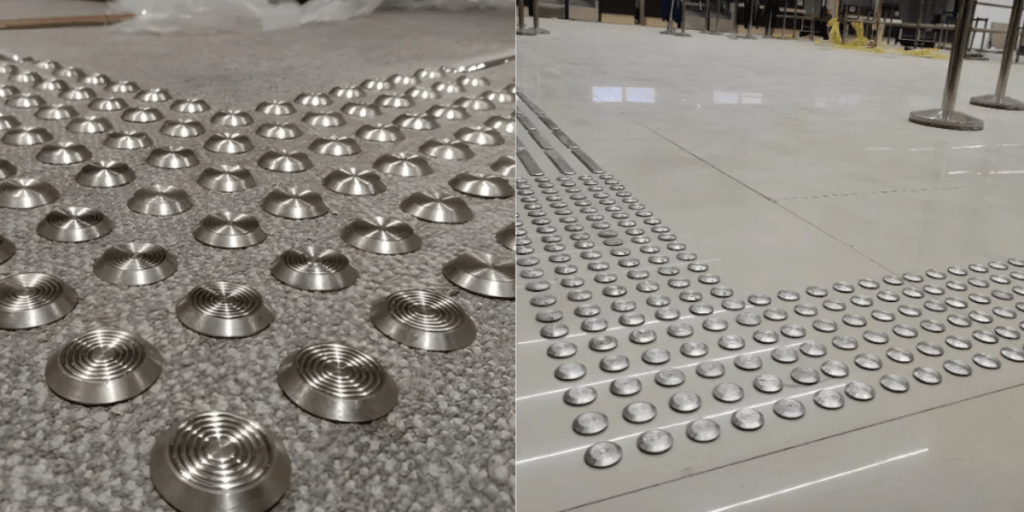
SS tactile studs are small raised indicators installed on floors, pathways, staircases, platforms, and other surfaces. “SS” refers to stainless steel, which is widely preferred because of its strength, durability, and resistance to corrosion. Stainless steel tactile studs are also popular because they provide a clean and professional appearance. They can be used in public places where both accessibility and attractive flooring design are important. We are the best SS Tactile Stud for Hospital.
These studs create a tactile surface that can be detected through touch, particularly with a cane or underfoot. They can also provide visual contrast when designed with suitable finishes. Tactile studs are commonly used as part of accessibility systems to help create safer and easier-to-navigate public and private spaces. These studs can be installed on different types of flooring, including tiles, concrete, stone, granite, and other suitable surfaces. Their raised surface can be detected through touch, helping visually impaired people understand changes in pathways or identify specific locations.
Why Choose AS Enterprise
1. High-Quality Stainless Steel Material
- A professional SS Tactile Stud Manufacturer uses suitable stainless steel grades such as SS 304 and SS 316 according to the application. These grades provide good strength and corrosion resistance, making them suitable for demanding pedestrian environments. SS 316 is often preferred for locations exposed to moisture, coastal conditions, or more aggressive environments because of its enhanced corrosion resistance. High-quality raw materials also help tactile studs maintain their appearance and functional performance over extended periods.
2. Excellent Corrosion Resistance
- Chennai’s humid and coastal environment makes corrosion resistance an important consideration when selecting tactile indicators. Stainless steel tactile studs are designed to withstand exposure to moisture and everyday environmental conditions. A dependable manufacturer can recommend the appropriate stainless steel grade based on whether the project is located indoors, outdoors, near the coast, or in a high-moisture environment.
3. Designed for High-Traffic Areas
- Tactile studs are frequently installed in places where thousands of people may walk over them every day. Railway stations, metro stations, airports, malls, hospitals, offices, and public walkways require products that can withstand continuous pedestrian movement. Quality SS tactile studs offer a durable solution for these demanding applications and can provide long-term service with comparatively low maintenance requirements.
4. Improved Accessibility and Navigation
- One of the main reasons to choose a quality SS tactile stud manufacturer is the role these products play in accessibility. Tactile studs can provide warning or guidance information through raised patterns. Warning studs can be used around potential hazards or changes in pedestrian routes, while directional tactile systems can help guide movement along designated pathways. This makes them valuable for inclusive infrastructure designed to support people with visual impairments.
5. Multiple Designs and Surface Patterns
- Different flooring surfaces require different installation methods. Stainless steel tactile studs can be supplied with options such as pin fixing, pressure fitting, adhesive fixing, or self-adhesive systems, depending on the product and substrate. This flexibility makes them suitable for installation on surfaces such as stone, ceramic, concrete, timber, vitrified flooring, and other substrates.
6. Custom Sizes and Specifications
- Every construction or infrastructure project may have different technical requirements. A dependable SS Tactile Stud Manufacturer in Chennai can provide customised dimensions, designs, finishes, fixing methods, and other specifications when required. Customization can be particularly useful for architects, contractors, infrastructure developers, and government projects where tactile indicators need to match a specific flooring system or project specification.
7. Strong and Durable Construction
- Tactile studs installed in public areas need to withstand regular pedestrian loads, cleaning activities, weather exposure, and general wear. Stainless steel provides a strong material option for these applications. Properly manufactured studs with accurate dimensions and secure fixing arrangements can provide dependable performance while reducing the need for frequent replacement.
8. Anti-Slip Surface Options
- Safety is a key consideration when selecting tactile indicators. Many tactile products are available with raised, textured, diamond, circular, or other surface patterns designed to provide tactile feedback and improved grip. Manufacturers can help customers select the appropriate surface design according to the location and flooring conditions.
8. Easy Installation Options
- Depending on the flooring and project requirements, tactile studs may be supplied with different installation options, including drilled/stem fixing and adhesive-backed designs. Self-adhesive versions can be suitable for applications where drilling is undesirable, while stem or drilled fixing can provide a more secure installation for appropriate substrates. A knowledgeable manufacturer can recommend the right installation method based on the substrate and expected traffic.
9. Consistent Product Quality
- For large infrastructure projects, consistency is extremely important. Tactile studs should maintain consistent dimensions, surface patterns, finish, and material quality throughout the supplied batch. An experienced manufacturer with proper quality-control procedures can help contractors and project managers maintain uniformity across large installations.
10. Cost-Effective Long-Term Solution
- The cheapest tactile stud is not necessarily the most economical option. Products with better material quality, durability, corrosion resistance, and appropriate installation can offer better long-term value. High-quality stainless steel tactile indicators can reduce replacement and maintenance requirements, making them a practical choice for commercial and infrastructure projects where long service life is important.
Applications of SS Tactile Studs
1. Railway Stations
- Railway stations are one of the major applications of SS Tactile Studs. They can be installed on platforms and pedestrian areas to provide warning and directional guidance to visually impaired passengers. Tactile indicators can help identify platform edges, pathways, stairs, entrances, exits, and other important movement areas.
2. Metro Stations
- Chennai’s metro infrastructure requires safe and accessible pedestrian movement. SS Tactile Studs can be installed around metro platforms, walkways, concourses, stairways, ramps, and designated pedestrian routes. Their durable stainless-steel construction makes them suitable for areas exposed to continuous foot traffic. Tactile systems are widely used in public transit environments for accessibility and navigation.
3. Airports
- Airports experience heavy pedestrian movement throughout the day. SS Tactile Studs can be used around terminals, passenger walkways, boarding areas, ramps, staircases, and other pedestrian zones. Their clean metallic appearance can also complement modern architectural flooring while providing tactile guidance.
4. Footpaths and Sidewalks
- SS Tactile Studs are highly useful on urban footpaths and sidewalks. They can create directional pathways and warning zones for people with visual impairment. When properly installed, the raised surface can be detected through a mobility cane or underfoot, helping pedestrians understand changes in their route.
5. Shopping Malls and Commercial Complexes
- Shopping malls, retail centres, office buildings, and commercial complexes need accessible movement areas for all visitors. SS Tactile Studs can be installed near entrances, elevators, staircases, ramps, corridors, and other important points where users may need additional guidance.
6. Hospitals and Healthcare Centres
- Hospitals have visitors with different mobility and accessibility requirements. SS Tactile Studs can be used along pedestrian routes, ramps, staircases, entrances, and corridors to provide additional navigation assistance for visually impaired visitors and patients.
7. Schools and Colleges
- Educational institutions can use tactile indicators to make campuses more accessible. SS Tactile Studs can be installed near entrances, walkways, staircases, ramps, corridors, and other high-use areas. This helps create a more inclusive environment for students, staff, and visitors.
8. Government Buildings
- Government offices and public service buildings are important applications for tactile accessibility products. SS Tactile Studs can be incorporated into flooring around entrances, ramps, stairs, corridors, and designated pedestrian routes to support barrier-free access.
9. Hotels and Hospitality Buildings
- Hotels, resorts, convention centres, and other hospitality properties can install SS Tactile Studs to improve accessibility. They can be used around entrances, reception areas, elevators, stairs, ramps, and pedestrian pathways while maintaining a modern and professional appearance.
10. Staircases and Ramps
- Stairs and ramps are important areas where tactile warnings can improve awareness. SS tactile indicators can be positioned at suitable locations to indicate changes in level or approaching hazards. Stainless steel options are particularly suitable where a strong and durable surface-mounted solution is required.
11. Public Parks and Recreational Areas
- Parks, public gardens, museums, walking areas, and recreational facilities can use tactile indicators to create more accessible pedestrian routes. SS Tactile Studs can provide guidance around pathways, crossings, entrances, and important changes in direction.
12. Smart City and Urban Infrastructure Projects
- Modern urban development increasingly focuses on accessibility and inclusive infrastructure. SS Tactile Studs can be incorporated into smart-city projects, pedestrian corridors, public plazas, transportation areas, and streetscape improvements.
13. Pedestrian Crossings
- Tactile warning indicators can be used around pedestrian crossings and other points where pedestrians need to be alerted to changes or hazards. Different tactile patterns can provide directional guidance or warning information depending on the application.
14. Corporate Offices and Business Parks
- Large corporate campuses and business parks can use SS Tactile Studs around entrances, walkways, elevators, staircases, ramps, and common areas. Stainless steel provides a professional appearance while supporting accessibility requirements.
15. Outdoor Public Infrastructure
- SS tactile studs are also suitable for selected outdoor applications where the product needs to withstand regular pedestrian use and environmental exposure. SS 304 and SS 316 grades are commonly offered for tactile applications, with SS 316 being particularly useful for demanding or corrosive environments.
Specification Table of SS Tactile Studs
| Specification | Details |
|---|---|
| Material | SS Tactile Stud |
| Product Name | Stainless Steel |
| Common Grades | SS 304 / SS 316 |
| Shape | Round / Dome |
| Surface Finish | Polished / Satin / As Required |
| Diameter | As per Requirement |
| Height | As per Requirement |
| Installation Type | Drill & Fix / Adhesive Fixing |
| Application | Indoor & Outdoor Flooring |
| Corrosion Resistance | High |
| Load Resistance | Suitable for Pedestrian Areas |
| Customization | Available |
| Usage | Pathways, Entrances, Stairs, Public Areas |
| Packaging | As Per Customer Requirement |
Benefits of SS Tactile Studs
1. Improves Accessibility
- One of the biggest benefits of SS Tactile Studs is that they make spaces easier and safer to navigate for people with visual impairments. The raised surface can be detected through a person’s feet or a long cane, providing important information about the surrounding environment. This helps users move more independently and confidently.
2. Excellent Durability
- Stainless steel is known for its strength and resistance to everyday wear. Tactile studs installed in busy areas can experience continuous foot traffic, cleaning, weather exposure, and mechanical impact. High-quality stainless steel construction helps the studs maintain their performance for a long period. This makes SS tactile studs particularly useful for Chennai’s busy commercial and public infrastructure projects where flooring receives heavy daily traffic.
3. Corrosion and Weather Resistance
- Outdoor tactile indicators are exposed to rain, humidity, dust, sunlight, and changing environmental conditions. Stainless steel provides good corrosion resistance, making it a suitable material for both indoor and outdoor applications. SS 304 and SS 316 are commonly used grades for tactile products, with SS 316 offering particularly strong corrosion resistance for demanding environments.
4. Low Maintenance
- Another important advantage is low maintenance. Properly manufactured and installed stainless steel tactile studs generally require only routine cleaning to maintain their appearance and functionality. Their resistance to corrosion and wear can reduce the need for frequent replacement. For building owners and facility managers, this can help reduce long-term maintenance work and replacement costs.
5. Enhanced Pedestrian Safety
- Tactile studs are designed to provide warning and directional information. Warning studs can alert users to areas such as stairs, crossings, platform edges, or changes in level, while directional tactile systems can help indicate a route. This makes them useful not only for visually impaired pedestrians but also for creating safer and more organized pedestrian environments.
6. Anti-Slip Surface Options
- SS tactile studs can be manufactured with different surface patterns, including textured or diamond-style designs. These surfaces can provide useful grip characteristics and tactile feedback. Some stainless steel tactile systems are specifically tested for slip resistance under dry and wet conditions. For outdoor walkways and high-traffic areas, selecting an appropriate anti-slip surface is an important consideration.
7. Modern and Attractive Appearance
- Accessibility products do not have to compromise the appearance of a building. Stainless steel has a modern and professional appearance that can complement granite, marble, concrete, tiles, stone, and other flooring materials. Depending on the requirement, tactile studs can be available with different surface finishes such as brushed or mirror finishes. This makes them suitable for modern commercial and architectural projects.
8. Suitable for High-Traffic Areas
- Chennai has numerous locations where large numbers of people move every day. Railway stations, metro stations, airports, malls, hospitals, offices, schools, and public buildings can all benefit from durable tactile solutions. Stainless steel tactile indicators are commonly used in transportation facilities and commercial buildings because they can withstand frequent pedestrian movement.
9. Multiple Installation Options
- Depending on the product and flooring material, SS tactile studs can be installed using different methods. Drill-and-pressure-fit installation and adhesive-based installation are among the options used for tactile indicators.
10. Supports Inclusive Infrastructure
- Modern infrastructure should be designed for everyone. Installing tactile indicators is an effective way to improve accessibility and create more inclusive public spaces. They can help architects, developers, government authorities, and infrastructure companies incorporate accessibility features into new construction as well as renovation projects. Tactile indicators are used across hospitals, schools, airports, railway stations, malls, offices, and public spaces.
Types of SS Tactile Studs
1. SS Dome Tactile Studs
SS Dome Tactile Studs feature a rounded, raised dome on the surface. They are primarily used as warning or hazard indicators. The raised profile provides tactile feedback underfoot and helps indicate areas where pedestrians should slow down or take additional care.
- Railway and metro platforms
- Pedestrian crossings
- Platform edges
- Building entrances
- Hazard zones
- Public walkways
2. SS Directional Tactile Studs
Directional tactile studs are designed to assist with pathway navigation. Instead of a prominent dome, directional systems generally use raised linear or bar-like patterns to communicate the direction of movement.
- Railway stations
- Shopping malls
- Public buildings
- Corporate offices
- Pedestrian corridors
- Accessible pathways
3. SS Ring Top Tactile Studs
Ring Top SS Tactile Studs have a concentric ring pattern machined or formed on the upper surface. The patterned surface provides tactile feedback while also creating an attractive architectural appearance.
- Marble flooring
- Granite flooring
- Concrete pathways
- Commercial buildings
- Transportation facilities
- Outdoor pedestrian areas
4. SS Diamond Top Tactile Studs
Diamond Top Tactile Studs feature a textured diamond-pattern surface. The pattern provides additional tactile recognition and can offer an anti-slip surface depending on the design.
- Public walkways
- Railway stations
- Metro projects
- Commercial buildings
- Outdoor accessibility pathways
- High-footfall areas
5. SS Plain Top Tactile Studs
Plain Top Tactile Studs have a smooth upper surface without a decorative pattern. They provide a clean and minimal appearance and can be suitable for architectural flooring applications where a simple finish is preferred.
- Existing flooring
- Commercial interiors
- Offices
- Shopping centres
- Corridors
- Accessibility upgrades
Conclusion
Stainless steel tactile studs are a practical solution for creating safer and more accessible environments. Their durability, corrosion resistance, low maintenance requirements, and modern appearance make them suitable for a wide range of applications. We are the best SS Tactile Stud for Bank.
If you are searching for a reliable SS Tactile Stud Manufacturer in Chennai, AS Enterprise can be a suitable choice for quality tactile stud requirements. With a focus on product quality, durable materials, different designs, and customer requirements, AS Enterprise provides tactile stud solutions for commercial, industrial, architectural, and public infrastructure applications. Whether you require tactile studs for a new construction project, renovation, public pathway, railway station, airport, hospital, shopping mall, or commercial building, selecting the right manufacturer can help ensure reliable and long-lasting results.