


Tactile Manufacturer in Mumbai
Introduction
Founded in 2023, AS Enterprise is a Rajkot, Gujarat–based company dedicated to manufacturing high-quality accessibility and safety products. With a modern production facility and a skilled technical team, we ensure every product meets the highest standards of precision, durability, and performance.
Tactile products play an important role in creating safe, accessible, and user-friendly spaces. They help people identify pathways, stairs, entrances, platforms, and other important areas through touch and visual guidance. As awareness about accessibility and inclusive infrastructure continues to grow, the demand for high-quality tactile products is increasing across commercial buildings, public spaces, transportation areas, educational institutions, hospitals, offices, and residential projects.
Sense Guide offers high-quality tactile solutions made for various accessibility needs if you’re searching for a trustworthy manufacturer in Mumbai. Sense Guide strives to promote safer and more accessible surroundings by paying close attention to product quality, durability, use, and finishing. Companies and building firms searching for a trustworthy Mumbai manufacturer need goods that are high-quality, long-lasting, transparent, and dependable. Sense Guide offers solutions that are made to meet accessibility standards while still looking useful and polished.
What Are Tactile Products
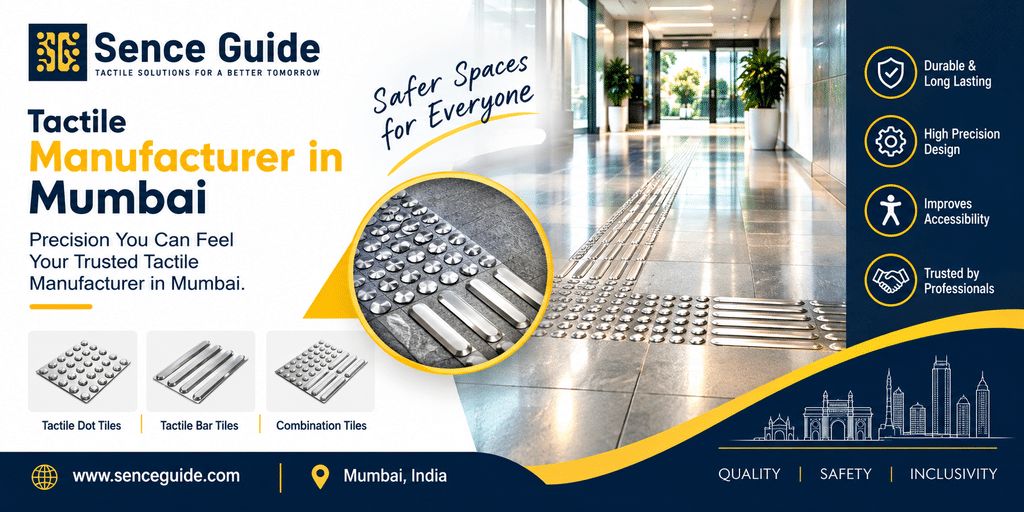
Tactile products are specially designed accessibility products that can be identified through touch. They generally feature raised patterns, dots, bars, or other surface designs that provide guidance or warning. These products are particularly useful for creating accessible spaces for people with visual disabilities. They can be installed at pedestrian pathways, staircases, railway and metro stations, public buildings, commercial complexes, airports, hospitals, and other locations where clear navigation is important.
Tactile indicators are commonly installed on floors, walkways, staircases, platforms, entrances, and other areas where additional guidance is required. They can help people recognise changes in direction, hazards, pathways, and important locations. A properly designed system can make public and private spaces easier to navigate while supporting inclusive infrastructure.
Importance of Tactile Products
Accessibility is an important part of modern infrastructure. Buildings and public areas are used by people with different abilities, so facilities should be designed with safety and ease of movement in mind. When selecting products for a project, product quality and suitability are important. A professional Tactile Manufacturer in Mumbai can provide products according to application requirements and help customers select appropriate solutions.
- Product selection
- Different tactile designs
- Material options
- Installation requirements
- Custom solutions
- Bulk project requirements
- Quality-focused manufacturing
- Application-based recommendations
Working directly with a manufacturer can also make communication easier when a project has specific size, design, or quantity requirements. Mumbai has a wide variety of infrastructure, from modern commercial buildings to transportation facilities and public spaces. These locations can have different flooring materials and usage conditions. Tactile products therefore need to be selected carefully.
Types of Tactile
1. Tactile Warning Studs
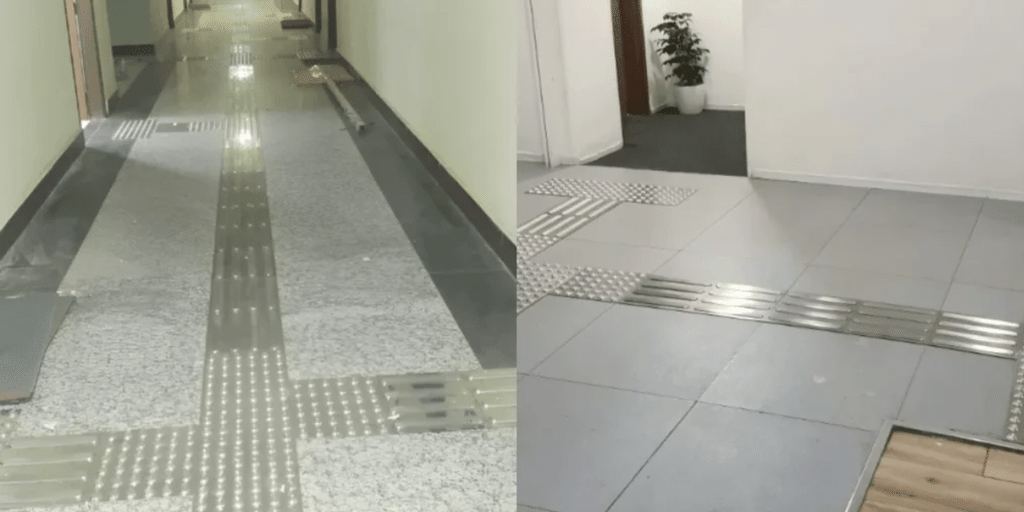
- Tactile warning studs are one of the most commonly used products. They feature raised dome-shaped surfaces that can be detected through a person’s feet or a white cane. These studs are generally installed in a grid pattern to indicate hazards such as stairs, ramps, platform edges, pedestrian crossings, and other changes in level. They can be manufactured using stainless steel, brass, aluminium, polyurethane, and other suitable materials. Stainless steel versions are particularly suitable for areas requiring durability and resistance to regular foot traffic.
2. Tactile Directional Strips
- Directional tactile strips are designed to guide visually impaired pedestrians along a safe and predetermined route. Unlike warning studs, these products normally have elongated raised bars or linear patterns that provide continuous directional information. They are useful in railway stations, metro platforms, airports, hospitals, shopping centres, public pathways, and large commercial buildings. Directional strips can be installed to connect entrances, service counters, lifts, stairways, exits, and other important destinations.
3. Stainless Steel Tactile Studs
- Stainless steel tactile studs are suitable for applications where high durability, appearance, and resistance to environmental conditions are required. They are available in grades such as SS 304 and SS 316, depending on the application and environment. SS 316 can be considered for demanding outdoor or coastal environments because of its higher corrosion resistance. These studs can also be produced with different surface patterns, including concentric rings, diamond patterns, plain surfaces, and abrasive inserts.
4. Brass Tactile Studs
- Brass tactile studs combine accessibility with an attractive decorative appearance. They are commonly considered for premium interiors such as hotels, commercial buildings, museums, offices, heritage properties, and designer flooring. Brass studs can be supplied with polished, lacquered, or protected finishes and can be installed on materials such as marble, granite, terrazzo, timber, vitrified tiles, and concrete.
5. PU Tactile Tiles
- Polyurethane (PU) tiles provide a lightweight and versatile solution for accessibility requirements. They can incorporate warning studs or directional patterns and are available in colours that provide visual contrast with the surrounding flooring. PU tactile systems can be useful in indoor corridors, commercial buildings, public facilities, transportation areas, and other locations where easy installation and visual identification are important.
6. Integrated Tactile Tiles
- Integrated tactile tiles combine multiple indicators into a single tile. Instead of installing individual studs one by one, the required warning or directional pattern is already incorporated into the tile. These products can help simplify installation and create a consistent appearance across large flooring areas. Tactile tiles are suitable for public walkways, transportation facilities, commercial spaces, hospitals, and other accessibility-focused projects.
Applications of Tactile Products
1. Railway and Metro Stations
- Tactile indicators are widely used at metro and railway stations to improve pedestrian safety and accessibility. Warning studs can be installed near platform edges to provide detectable warnings, while directional strips can help guide visually impaired passengers along designated routes. They are also useful around stairways, escalators, entrances, and concourses.
2. Airport Terminals
- Airports have large pedestrian areas where clear navigation is important. Tactile studs and directional strips can be installed near boarding areas, walkways, stairs, ramps, lifts, and other important transition points. Durable stainless-steel and other materials can be selected according to indoor or outdoor conditions.
3. Hospitals and Healthcare Centres
- Hospitals require safe and accessible movement for patients, visitors, and staff. Tactile indicators can be used around entrances, corridors, staircases, ramps, lift lobbies, and pedestrian routes. Self-adhesive studs are also useful for renovation projects where drilling may create dust, noise, or disruption.
4. Shopping Malls and Retail Centres
- Shopping malls have large floor areas, multiple entrances, escalators, staircases, and changing pedestrian routes. Tactile indicators can create safer accessible pathways and help visually impaired visitors identify important areas. Stainless steel, aluminium, brass, and PU options can be selected according to the appearance and requirements of the project.
5. Educational Institutions
- Schools, colleges, universities, and training centres can use products to develop more inclusive and accessible campuses. Tactile pathways can be installed around entrances, corridors, staircases, ramps, pedestrian walkways, and other frequently used areas.
6. Government and Public Buildings
- Government offices, municipal buildings, courts, public service centres, and other civic facilities can incorporate indicators into their accessibility infrastructure. Tactile systems help create clearly identifiable routes and warning areas for people with visual disabilities.
7. Pedestrian Walkways and Footpaths
- Tactile indicators are highly useful on public footpaths, pedestrian walkways, smart-city projects, and accessible streets. Directional strips can indicate a designated walking route, while warning studs can identify crossings, ramps, kerbs, and other potential hazards.
8. Stairs, Ramps and Escalators
- Stairs and ramps can create significant navigation challenges for visually impaired pedestrians. Tactile warning indicators can be positioned at appropriate locations around staircases, ramps, and escalators to provide detectable information about changes in level or potential hazards.
9. Hotels and Resorts
- Hotels, resorts, and hospitality properties can use tactile products to improve accessibility while maintaining an attractive architectural appearance. Premium finishes such as brass and PVD-coated studs can be suitable for luxury interiors, hotel entrances, lobbies, and other high-end spaces.
10. Corporate Offices
- Modern corporate offices can use tactile indicators around entrances, reception areas, lift lobbies, staircases, and accessible routes. Self-adhesive tactile products can be particularly useful in existing offices where installation needs to be completed with minimal disruption.
11. Residential and Township Projects
- Large residential complexes, housing developments, and townships can incorporate pathways into common areas, entrances, parking zones, walkways, and recreational spaces. This supports the development of more inclusive and barrier-free environments.
Benefits of Choosing Quality Tactile Products
1. High-Quality Tactile Products
- One of the major benefits of working with a professional Tactile Manufacturer in Mumbai is access to properly manufactured and quality-controlled products. Tactile indicators need to remain firmly installed and provide a clear raised surface for users. Manufacturers with controlled production processes can maintain consistency in dimensions, material quality, finishing, and overall performance. Quality manufacturing is particularly important for public areas such as railway stations, metro stations, airports, hospitals, shopping malls, educational institutions, footpaths, and commercial buildings.
2. Wide Range of Materials
- A reliable tactile manufacturer can offer products in different materials depending on the application and environment. Common options include stainless steel, brass, aluminium, polyurethane, and porcelain. Different materials can be selected according to durability, appearance, installation location, maintenance requirements, and project specifications. For example, stainless steel indicators can be suitable for demanding public areas, while PU products can be useful where colour contrast and flexibility are important.
3. Better Durability
- Tactile indicators installed in public spaces are exposed to regular pedestrian movement, cleaning, weather, and other environmental conditions. Choosing products manufactured from suitable materials can help improve their service life. A professional manufacturer can select appropriate materials, surface finishes, and fixing methods for the intended application. This helps customers obtain solutions designed for long-term use rather than products selected only on the basis of initial price.
4. Multiple Material Options
- Different projects require different materials depending on location, appearance, durability, and installation conditions. Manufacturers can provide products in materials such as stainless steel, brass, aluminium, polyurethane, and porcelain. For example, stainless steel can be suitable for many indoor and outdoor applications, while PU tactile products can be selected where specific visual and installation requirements exist.
5. Durable Construction
- Quality tactile products are designed to withstand regular pedestrian movement and demanding installation environments. Stainless steel tactile studs, for example, are available in grades such as SS 304 and SS 316, with SS 316 commonly selected for more demanding environments. Working with an experienced Tactile Manufacturer in Mumbai can therefore help businesses source products that are appropriate for their project’s operating conditions.
6. Different Installation Methods
- Tactile products can be supplied with different fixing methods depending on the flooring surface and project requirements. Available options can include stem fixing, screw fixing, adhesive systems, and other installation arrangements. This flexibility makes solutions suitable for different flooring types and construction conditions.
7. Standards-Oriented Products
- Accessibility projects often need tactile indicators with appropriate dimensions, patterns, spacing, and installation arrangements. Manufacturers serving professional infrastructure projects may design products according to recognised accessibility standards and project-specific drawings. For large projects, buyers can discuss the applicable standard, material, dimensions, fixing method, and installation requirements with the manufacturer before placing an order.
8. Better Visual and Tactile Identification
- Tactile indicators can provide both physical and visual cues. Different finishes, materials, and colours can be selected to create suitable visual contrast while maintaining the function. Some manufacturers also offer different surface patterns and finishes. This can be particularly useful in public areas where accessibility and clear identification are important.
9. Custom Solutions for Projects
- Every construction project can have different requirements. A manufacturer may provide customised sizes, materials, finishes, fixing systems, or product configurations according to project drawings and specifications. This is useful for architects, interior designers, infrastructure contractors, and project consultants who need tactile solutions that fit a particular floor layout.
10. Professional Manufacturing Support
- Purchasing directly from a manufacturer can make it easier to discuss technical specifications, quantities, materials, installation requirements, and project drawings. Some manufacturers also provide installation templates, technical datasheets, samples, and product documentation. This type of technical support can help contractors and project teams plan installation more efficiently.
Why Choose Sence Guide
1. High-Quality Manufacturing
- A professional tactile manufacturer focuses on maintaining consistent product quality throughout manufacturing. Good-quality raw materials, accurate dimensions, proper finishing, and controlled production processes help create products that can perform reliably in demanding environments. For tactile accessibility products, manufacturers may work with materials such as stainless steel, brass, aluminium, polyurethane, and porcelain. Different materials can be selected according to the installation environment, required durability, appearance, and project requirements.
2. Wide Range of Tactile Products
- One major advantage of working with an experienced manufacturer is access to a wider product range. Customers can select products according to their specific application rather than depending on one standard design. Depending on the manufacturer, the range may include studs, directional strips, tactile tiles, warning indicators, or other customised tactile solutions. This makes it easier for contractors, architects, infrastructure companies, and project developers to source suitable products from one supplier.
3. Customised Solutions
- Every project may have different dimensions, materials, fixing methods, colours, designs, and quantity requirements. A professional manufacturer can understand these requirements and provide suitable solutions. Custom manufacturing is particularly useful for large commercial projects, public infrastructure, transportation areas, hospitals, educational buildings, shopping centres, and other locations where accessibility requirements need to be considered.
4. Durable Products for Long-Term Use
- Tactile products are often installed in areas where they experience regular pedestrian movement and environmental exposure. Therefore, durability is an important factor when selecting a manufacturer. A manufacturer offering suitable material options can help customers select products according to indoor or outdoor conditions. Stainless steel, for example, may be suitable where corrosion resistance and long service life are important. Other materials can be selected according to the specific application.
5. Accurate Dimensions and Finishing
- Precision is important in tactile manufacturing. Consistent dimensions help ensure that products fit properly during installation and maintain a professional appearance after installation. Manufacturers with suitable production equipment and experienced technical teams can maintain dimensional consistency and provide clean finishing. This can reduce installation difficulties and help create a uniform finished surface.
6. Suitable Fixing Options
- Different projects may require different installation methods. Professional manufacturers can offer products with different fixing options depending on the surface and application. Available methods may include screw fixing, adhesive fixing, stem fixing, or other installation systems. Some manufacturers also provide installation-related templates or technical information to make project execution easier.
7. Support for Large Projects
- Large projects require more than simply supplying products. They require proper quantity planning, product selection, packaging, delivery coordination, and technical communication. An experienced Tactile Manufacturer in Mumbai can work with architects, contractors, builders, infrastructure companies, flooring contractors, and project managers to understand project requirements and supply products accordingly.
8. Competitive Pricing
- Buying directly from a manufacturer can provide cost advantages compared with purchasing through multiple intermediaries. For bulk requirements, manufacturers may also offer project-based pricing depending on quantity, material, design, and specifications. Competitive pricing becomes especially important for large infrastructure and commercial projects where thousands of units may be required.
9. Reliable Supply and Timely Delivery
- Timely delivery is essential for construction and infrastructure projects because delays in one product can affect installation schedules. Mumbai’s established industrial ecosystem and logistics connectivity can support efficient sourcing and distribution. Manufacturers with proper inventory and production planning can also handle repeat and bulk orders more effectively.
Choosing the Right Tactile Manufacturer in Mumbai
Before purchasing tactile products, businesses should consider several factors. Material quality, product dimensions, surface design, durability, installation requirements, visibility, and application area should all be evaluated.
The location of installation is also important. Products used outdoors may need to withstand weather conditions and heavy pedestrian traffic, while indoor applications may have different requirements. Working with an experienced manufacturer can make product selection and project planning easier.
It is also useful to discuss the project requirements with the manufacturer before placing an order. This helps ensure that the selected products are suitable for the intended application.
Conclusion
Tactile products are an important part of accessible and inclusive infrastructure. They provide directional and warning information through raised surfaces and can help improve navigation in public and private spaces. From railway stations and airports to hospitals, schools, shopping malls, offices, and public buildings, tactile solutions have become increasingly valuable.
Sense Guide provides tactile solutions for a range of applications to companies and project developers looking for a trustworthy Tactile Manufacturer in Mumbai. Sense Guide can assist initiatives that seek to establish safer and more welcoming settings by emphasising quality, utility, longevity, and accessibility. Choosing the right tactile product and manufacturer can make a significant difference in the performance and usability of an accessibility system. With suitable products and proper installation, tactile pathways and indicators can become an effective part of modern infrastructure planning.